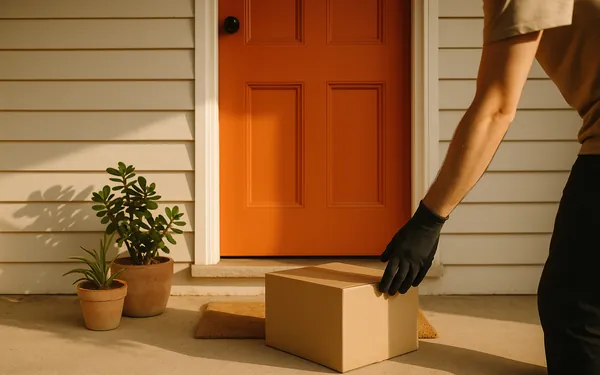
Online stores put a lot of care into outbound orders. Each one is booked, labelled, manifested and tracked. Returns often get none of that. A customer is told to post the item back, or a staff member books a one-off collection through whichever courier portal is open, and the returned goods travel without anyone at the store able to see where they are.
A return is freight moving in the other direction. It needs a booking, a consignment number and tracking like any outbound order. This guide covers when the store has to arrange the collection, how to book a return, a worked example, and how to keep returns in the same record as everything else.
When the Business Has to Collect
Under Australian Consumer Law, who pays to get a faulty product back depends on the product. The ACCC's page on repair, replace, refund, cancel sets it out:
- "Consumers are responsible for returning products that can be posted or easily returned."
- "Businesses are responsible for paying for the shipping costs or collecting faulty products that are large, heavy or hard to remove, such as widescreen televisions, beds, installed appliances, like stoves or dishwashers, extension ladders stuck in an extended position."
- "If the business confirms that the product does have a problem, it must reimburse the consumer for any reasonable return costs they have already paid."
For a store selling small items, most faulty-goods returns will come back by post at the customer's hands. For a store selling furniture, appliances or anything bulky, the store books the collection itself. Read the ACCC page for how it applies to your products, and set your returns policy with that in mind.
Change-of-mind returns are a separate matter, set by your own store policy. Many stores offer them, and the booking steps below work the same way for both.
Setting Up a Return Booking
A return consignment is an outbound booking with the two ends swapped.
Pickup is the customer. The pickup panel carries the customer's name, phone, email, address and suburb. Add anything the driver needs to know: which entrance, whether there are stairs, when someone will be home.
Delivery is your warehouse. The delivery panel carries your returns address and the contact who receives returns, which may differ from your despatch contact.
The despatch date and time is the collection. Book it for a time the customer has agreed to, so the driver does not arrive to an empty house.
Describe the item as it will travel. A returned item often comes back in worse packaging than it left in. Ask the customer what it is packed in, and book the weight and size as they will be on collection day.
Reference the original order. Put the original order or consignment number in the booking reference, so the return can be matched to the sale when it arrives.
Worked Example: Collecting a Faulty Bulky Item
Take a hypothetical online store selling home appliances. A customer reports that a freestanding oven delivered last week will not heat. The store confirms the fault from the customer's description and photos, and under the ACCC guidance it is the kind of large, heavy product the business must collect.
Customer service agrees a collection day with the customer and books a return consignment. The pickup panel has the customer's address and a note that the oven is in the kitchen, ground floor, with a step at the front door. The delivery panel has the store's returns bay. The booking reference carries the original order number. The item is booked at its packed weight and size, as the carrier needs the right equipment to move it.
The return consignment now sits in the same consignment list as the store's outbound orders, with its service, despatch date, ETA and status. When the customer calls to ask whether collection is still on for Thursday, customer service looks it up there. When the oven reaches the returns bay, the warehouse matches it to the original order by the reference.
Keep Returns in the Same Record
When returns are booked outside the normal system, three problems follow. Customer service cannot see where a return is. The warehouse does not know what is coming. And the freight cost of returns is hard to separate from everything else, because the invoices come from wherever each return happened to be booked.
On a managed freight platform, returns go through the same booking form as outbound orders. Senditt's Create Consignment form starts with the despatch date and time and then gives pickup and delivery a panel each, so a return is booked the same way as a sale. Every consignment, outbound or return, is tracked across carriers in one list. Senditt manages the carrier accounts, billing and support, with every booking on Senditt's negotiated rates across 35+ carriers, from parcel to pallet, so a bulky return can go with a carrier equipped for it.
A Returns Checklist for Customer Service
- Confirm whether the return is a fault covered by the consumer guarantees or a change-of-mind return under your own policy.
- For a large, heavy or hard-to-remove faulty product, arrange the collection yourself.
- Agree a collection day and time with the customer before booking.
- Book the customer as pickup and your returns address as delivery.
- Record how the item is packed, and book the weight and size it will travel at.
- Put the original order number in the booking reference.
- Tell the warehouse what is coming and when.
If returns at your store are booked wherever there happens to be an open portal, book a freight review. There is no lock-in on standard accounts. Fixed terms apply only where you agree to one. The platform page shows how booking and tracking sit in one login.
Senditt is a managed freight platform (4PL). Senditt is not Sendle and is not affiliated with it.